
Choosing and caring for table linen
A tablecloth is measured from the edge of the table down, and the length of that drop decides whether a table looks casual, formal or simply unfinished.
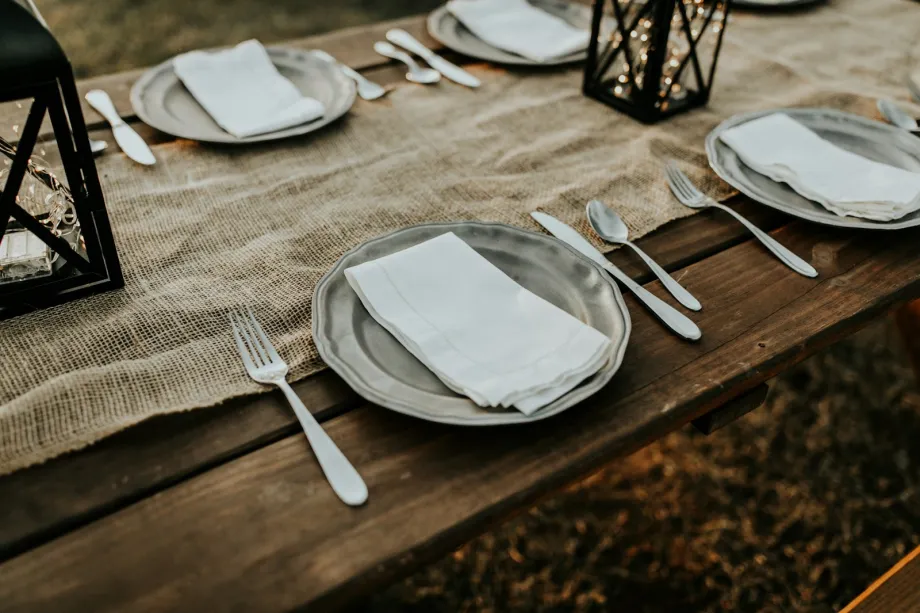
Measuring the table
A cloth that is too small looks skimpy; one that is too large drags on the floor and catches on knees. Start with a firm tape and measure the tabletop itself, edge to edge.
For a square or rectangular table, measure the width and the length. Then decide on the drop, the part of the cloth that hangs below the edge, and add twice that figure to each measurement. A table 90 centimetres wide and 180 centimetres long, with a 25 centimetre drop all round, needs a cloth of about 140 by 230 centimetres.
Choosing the drop
The drop changes both the look and the practicality of a table.
A short drop clears the laps of people sitting down and does not tangle with chairs. It suits breakfast tables, kitchen tables and everyday meals.
A longer drop, falling towards the knees, looks more traditional and suits dinners and celebrations. Guests need a moment more to settle their napkins and chairs, which is part of the occasion.
A floor-length cloth hides the table legs completely. It is used for buffets and display tables where people stand or walk around rather than sit.
Any figures you see quoted for these drops are typical, not fixed. Chair height, table height and how close guests sit all make a difference, so drape a sheet over the table to try a length before buying.
Round and oval tables
For a round table, measure the diameter at the widest point and add twice the drop. A table 120 centimetres across with a 30 centimetre drop needs a round cloth of about 180 centimetres.
For an oval table, measure the length along the centre and the width at the widest point. An oval cloth follows the curve neatly. A rectangular cloth of the same overall size will also work, though its corners will hang lower than the sides.
Fibres and weaves
How a cloth looks, feels and hangs depends on its fibre and weave.
Linen
Linen from flax is one of the oldest table textiles. Its fibres are long and stiff, giving the cloth body and a crisp fall from the table edge. It feels cool, takes up spills quickly and dries fast.
Plain-weave linen shows small natural variations in the yarn, called slubs, which give it a lively surface. Linen softens with each wash as the natural binding substances in the fibre break down, and a well made cloth can serve for many years.
Cotton twill and damask
Cotton gives a smoother, more even surface and takes woven patterns well. Twill has a diagonal rib that makes a dense cloth with a straight, clean drape.
Damask combines shiny and matte areas within one weave, so a pattern appears as the light moves across the table. It needs no print or dye to show. Cotton damask takes starch well and keeps a crisp look through a long dinner.
Coated cloths
Coated cloths have a woven base of cotton or linen with a thin acrylic or polyurethane layer on top. Spills sit on the surface and can be wiped away rather than soaking in.
Good coated fabrics keep much of the drape of an ordinary cloth, unlike stiff old-fashioned oilcloth. They suit busy kitchen tables, outdoor dining and households with small children.
Everyday and occasion tables
For daily meals, the best cloth is one that is easy to live with. Medium-weight cotton or a cotton blend washes reliably and needs little ironing. Mid-tones and small woven patterns hide minor marks between washes.
For special occasions, heavier fabrics give the table presence. Heavy linen, cotton damask and embroidered cloths look settled and generous. Napkins in the same fabric tie the setting together.
Napkins
Napkin sizes vary, but smaller squares are typical for breakfast and lunch and larger ones for dinner, where they need to cover the lap through several courses. Small napkins wash easily and fold flat into a drawer. Larger ones in dense linen or damask hold a crisp fold on the plate without collapsing.
Stains, washing and pressing
Quick action does more than any product. The longer a stain sits, the further it works into the fibres.
Dealing with spills
- Blot straight away with a clean, dry cloth. Rubbing spreads the stain and drives it deeper.
- For wine, fruit and other water-based stains, rinse with cold water from the back of the cloth so the colour is pushed out the way it came in.
- For grease, work a little washing-up liquid or liquid detergent into the dry mark and leave it for a few minutes before washing.
- For stubborn marks, soak in an oxygen-based stain remover before washing, following its instructions. Chlorine bleach is best avoided on linen, as it can weaken the fibres and leave white cloth yellowed.
Washing and drying
Wash at the temperature on the care label. A moderate spin leaves fewer hard creases than a fast one. Line drying in the shade keeps cloths fresh without fading coloured linen, and saves a great deal of ironing compared with a hot dryer, which sets wrinkles deep into linen.
Pressing and storing
Linen presses best while still damp, with a hot iron and steam. Iron damask on the reverse so the shine of the pattern is kept. Store cloths flat or rolled in a dry, airy cupboard; rolling long cloths on a tube avoids sharp fold lines that can weaken over time.
Frequently asked questions
How do I work out the right tablecloth size?
Measure the length and width of the tabletop, decide how far you want the cloth to hang over the edge, then add twice that drop to each measurement. For a round table, add twice the drop to the diameter.
What is the difference between linen and cotton tablecloths?
Linen, made from flax, has more body and texture, feels cool and softens with every wash. Cotton is smoother, more uniform and takes woven patterns such as damask well. Both last for years with good care.
How should I treat a red wine stain on a tablecloth?
Blot, do not rub. Rinse the area with cold water from the back of the cloth as soon as you can, then treat any mark that remains with a stain remover suited to the fabric before washing.
Can coated tablecloths be ironed?
Only as the care label allows. Where ironing is permitted, it is usually on the reverse, at a low setting, with no steam and a pressing cloth.