
Caring for bedding and household linens
Most worn-out sheets and flattened duvets are not victims of age but of too much heat, too much detergent and too little fresh air, and all three are easy to change.
Cotton, linen, wool, silk and down all come from plants or animals, and each reacts in its own way to water, heat and friction. A modern washing machine offers a long menu of programmes, yet the gentlest choice is often the right one. Read the care label first: it reflects how that particular fabric, dye and construction were tested, and it outranks any general rule, including the ones below.
Air more, wash less
Every wash takes a little out of a fabric. Fibres rub against each other, dyes loosen and seams flex. Airing between washes keeps textiles fresh with none of that wear.
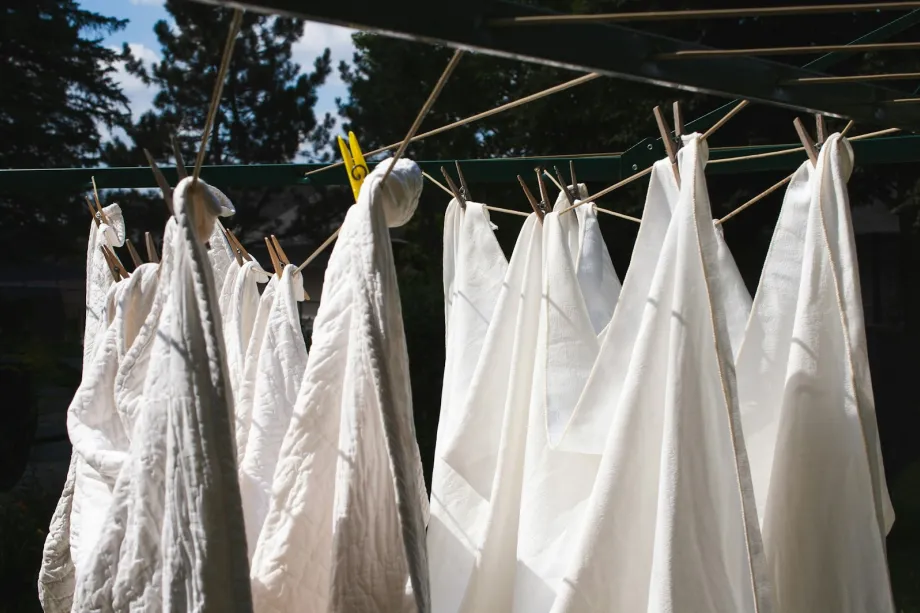
Wool is the clearest case. It resists odours well, and a blanket shaken out and hung over a line on a dry, breezy day usually comes back smelling clean. Linen sheets also benefit from a few hours outdoors between uses. Sunlight brightens white cotton and linen, but it fades colours, so hang dyed pieces in the shade or turn them inside out.
Down and feather duvets need air more than water. A good shake each morning spreads the filling back across the casing, and an occasional few hours outside on a dry day lets body moisture escape from the clusters so the duvet regains its loft.
Water temperature and spin
When something does need washing, start with the temperature on the label and resist the urge to go hotter "to be safe". Cooler washes protect dyes, limit shrinkage and are kinder to wool and silk. Everyday cotton and linen bedding usually copes with a warm wash, while higher temperatures tend to be reserved for whites, kitchen cloths and bedding used during illness, and only where the label permits.
Spin speed matters too. A fast spin removes more water but presses deep creases into linen and puts extra strain on seams. A moderate spin leaves sheets easier to smooth out. Wool needs a gentle, short programme or hand washing, because heat combined with agitation makes the fibres lock together and felt.
Detergent and additives
Many households use more detergent than a load needs. The surplus does not clean better; it stays in the fabric, leaving towels stiff and sheets slightly tacky. The dosage guide on the pack, adjusted for load size and the hardness of your water, is a better starting point than a generous splash.
Biological detergents contain enzymes that break down protein stains. Wool and silk are themselves protein fibres, so a non-biological or dedicated wool and silk wash is the safer choice for them. Fabric softener is best left out for towels and most bedding: it leaves a film on the fibres that reduces absorbency over time.
Drying by fibre
Drying decides how a textile keeps its shape. High heat in a tumble dryer shrinks natural fibres and weakens them, so line drying remains the gentlest route for everyday linen. Peg sheets along their length rather than from one corner to spread the wet weight.
Wool should never hang while it is heavy with water, because the weight pulls it out of shape. Roll it in a dry towel to press out the excess, then lay it flat away from radiators. Silk dries best in shade. Down duvets are the exception that often needs a dryer: they take a long time to dry right through, and a low heat with a few dryer balls helps break up clumps. Any damp left in the centre can turn musty, so check carefully before the duvet goes back on the bed.
Ironing without damage
Match the iron to the fibre and the job becomes easier. Linen takes a hot iron and presses best while still damp; if it has dried out, mist it with water and leave it rolled up for a few minutes. Cotton prefers a medium to hot setting, again slightly damp. Sateen keeps its soft sheen when pressed on the reverse.
Silk needs a low setting, no steam and a pressing cloth between iron and fabric. Wool rarely needs pressing at all: holding a steam iron just above the surface lifts creases without flattening the yarn.
Storing seasonal pieces
Before a duvet, blanket or spare set of sheets goes away for months, wash or air it thoroughly and make sure it is completely dry. Traces of skin oil, food or moisture attract clothes moths and invite mildew.
Sealed plastic boxes and vacuum bags are poor homes for natural textiles. They trap whatever humidity is left, which can lead to yellowing and stale smells, and long compression is hard on down and wool. Breathable cotton or canvas bags keep dust off while letting the contents breathe. A cool, dark, dry cupboard is ideal. Many people tuck cedar blocks or lavender sachets among wool and linen; they are a pleasant habit rather than a guarantee against moths, so check stored wool from time to time as well.
Frequently asked questions
How often should a wool blanket be washed?
Not often. Regular airing on a dry day keeps wool fresh, and a full wash is usually only needed for stains or heavy soiling. Use a wool detergent and the cool, gentle setting the care label allows.
Why do towels and sheets feel stiff after a while?
Usually because of build-up. Too much detergent leaves residue in the fabric, and fabric softener coats the fibres. Using the right dose and skipping softener tends to bring back the original feel.
What is the best way to store a down duvet in summer?
Clean and fully dry, in a breathable cotton bag, in a cool, dry cupboard. Plastic boxes and vacuum bags trap moisture and crush the filling for months at a time.