
Children's bedding, from first cot to first big bed
A baby's cot needs surprisingly little bedding, and the safest arrangement is also the simplest one, a firm flat mattress, a well fitted sheet and a sleeping bag of the right size.
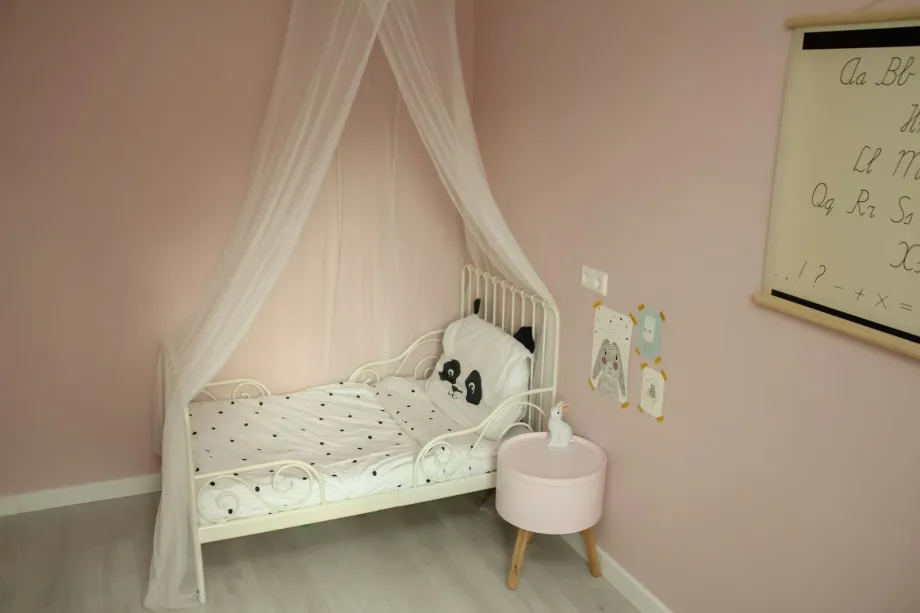
Children's bedding changes with every stage of growth, from the first Moses basket or crib through the cot to a single bed. At each step the bedding has two jobs: keep the child comfortable, and for babies above all, keep the sleep space safe. The second job decides much of the first.
Safe sleep for babies under 12 months
Health services and safe sleep charities in many countries give consistent advice for the first year. A baby should be put down to sleep on their back, for every sleep, day and night. The mattress should be firm, flat, in good condition and fit the cot without gaps around the edges. Many guides also recommend a waterproof cover so the mattress stays clean and dry.
What stays out of the cot
For babies under 12 months, the cot should hold no pillows, duvets, quilts, bumpers, sleep positioners, soft toys or loose blankets. A young baby cannot reliably move away from something covering the nose and mouth, and soft bedding also raises the risk of overheating. Cot bumpers, once sold as padding for the bars, are advised against for the same reasons and because of the risk of entanglement.
What goes in is short: a fitted sheet made for that mattress, and a baby sleeping bag. Some families use a thin cellular blanket instead of a sleeping bag; official guidance explains how to do this safely, with the baby's feet at the foot of the cot and the blanket tucked firmly no higher than the shoulders. A sleeping bag avoids loose fabric altogether, which is why it is so widely used.
Choosing a sleeping bag
A baby sleeping bag fastens around the shoulders and keeps the baby covered without anything that can ride up over the face. Look for:
- the right size for the baby's weight or age, with a neck opening and armholes snug enough that the baby cannot slip down inside
- no hood, and nothing loose or heavily padded
- a tog rating that suits the room, using the maker's guidance for the temperature
Babies regulate heat through the head and face, so the head should stay uncovered indoors. UK guidance commonly suggests a room of around 16 to 20°C, and a simple room thermometer takes the guesswork out of it. Feel the back of the neck or the tummy rather than the hands: if the skin is hot or sweaty, remove a layer. Keep the cot away from radiators, heaters and sunny windows.
Once a baby can roll from back to front and back again unaided, they can be left to find their own position, but should still be placed on their back at the start of each sleep.
Sheets that fit the mattress
Cot and cot bed mattresses come in a few common sizes, but they are not identical across makers or countries. Measure the mattress and buy fitted sheets made for it. The sheet should be taut, with no slack fabric across the sleeping surface. Elastic running around the whole edge holds better than elastic at the corners only, and is less likely to work loose as a toddler moves about.
When the time comes to move to a toddler bed or a single bed, usually well after the first birthday, a light duvet and a flat, low pillow can be introduced. Choose a children's size rather than an adult duvet, which hangs over the sides, slides off and is often too warm.
Fibres and weaves for young skin
Children's skin is thinner than an adult's and reacts quickly to heat, rubbing and trapped sweat. Breathable fabrics help.
Cotton is the everyday choice. It is soft, strong, takes frequent washing well and lets moisture pass. Organic cotton is grown under rules that limit synthetic pesticides and fertilisers; it is a choice about farming as much as comfort. Linen is another breathable option for warm rooms, and it softens noticeably with washing.
Weave changes the feel. Percale is a plain weave with a matte, cool, light handle. Cotton jersey is knitted rather than woven, so it stretches and feels like a soft T-shirt, which makes fitted cot sheets easy to put on. Muslin is light and open, often used for summer sleeping bags and cloths. Brushed cotton has a raised surface that feels warm to the touch in winter.
Thread count matters less than the yarn. A moderate count in good single yarns usually feels soft and breathes well. Fabrics described as "hypoallergenic" are making a marketing claim rather than a medical one. If a child has eczema or allergies, the advice of a doctor or health visitor comes first.
Washing children's bedding
Cot sheets meet milk, dribble, nappy leaks and the odd illness, so they are washed far more often than adult bedding. Keeping a few spares makes the routine easier.
Temperature and detergent
Follow the care label for temperature. Most cotton children's bedding is made to cope with regular warm washes, and some labels allow a hotter wash for whites or after illness. Many parents prefer a non-biological, fragrance-free detergent for children's things, measured carefully so no residue is left in the fabric.
Softener, drying and storage
Fabric softener is best skipped. It leaves a coating that makes cotton less absorbent and adds fragrance that sensitive skin does not need. Line drying is gentle on fabric and elastic; if you tumble dry, use the setting on the label, since high heat shrinks cotton and weakens elastic edges. Store spare sheets clean and fully dry in a cupboard, and check the elastic and seams from time to time. A sheet that no longer grips the mattress firmly should be retired.
Frequently asked questions
What is the difference between a cot and a cot bed?
A cot is designed for babies and young toddlers. A cot bed is usually a little larger and converts into a low toddler bed when the sides are removed. Mattress sizes vary between makers, so buy sheets to fit the mattress you have.
Why should pillows and duvets be kept out of a baby's cot?
Official safe sleep guidance advises that babies under 12 months sleep on their back on a firm, flat mattress with no pillows, duvets, quilts, bumpers or loose bedding, because soft items raise the risk of suffocation and overheating. A fitted sheet and a correctly sized baby sleeping bag are the usual approach.
Which fabrics suit children with sensitive skin?
Smooth, breathable natural fabrics such as cotton percale or soft cotton jersey are a common choice. They do not treat any skin condition, so follow the advice of a doctor or health visitor if a child has eczema or another skin problem.
How often should children's bed linen be washed?
Many families change cot and children's sheets weekly, and straight away after spills, sickness or nappy leaks. Wash at the temperature shown on the care label.