
Fitted Sheets: How to Choose and Use Them Without the Morning Wrangle
A fitted sheet that stays put and suits your mattress stops you wrestling crumpled corners every morning. This guide explains what a fitted sheet is, how to get the size and depth right, and what to look for in the material so you buy once and sleep comfortably.
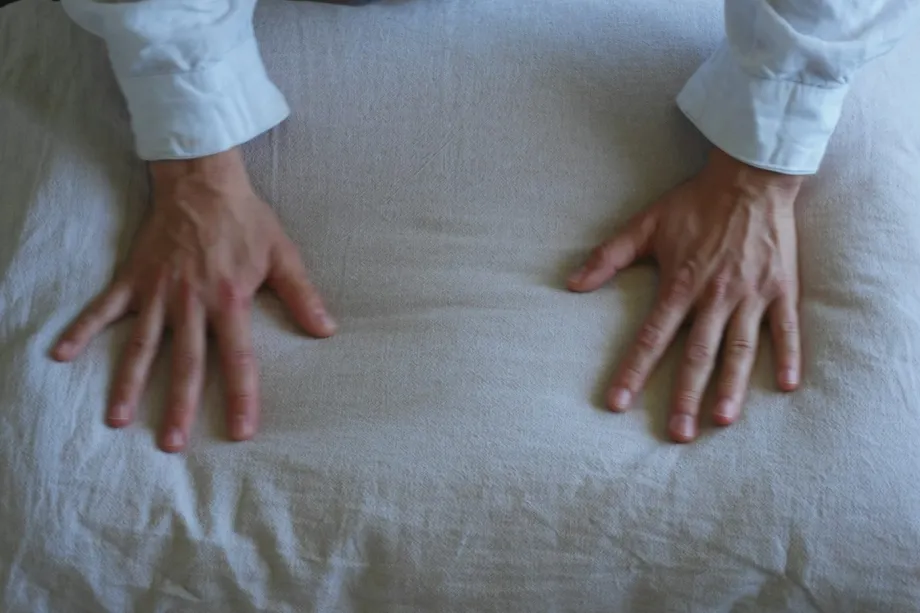
What is a fitted sheet?
A fitted sheet is a bottom sheet with elasticated corners, designed to hug a mattress and stay put all night. Unlike a flat sheet, which is a plain rectangle you tuck under the mattress, a fitted sheet has sewn-in elastic along all four edges or just at the corners. The elastic keeps the sheet taut so it does not bunch up under you.
The part that hugs the sides of the mattress is called the pocket. Its depth must match your mattress thickness, otherwise the sheet either rides up or leaves fabric flapping loose. Most fitted sheets are made of cotton, cotton blends or linen, because those fibres breathe and soften with washing. The elastic itself is usually encased in a hem, which keeps it from twisting and makes the sheet last longer through repeated stretching.
If your top sheet untucks itself by morning, a fitted sheet stops that. It is the one piece of bedding that stays smooth and anchored on its own, which is why nearly every modern bed starts with one. When you get the pocket depth right and choose a fabric that suits your sleep temperature, a fitted sheet turns an unmade-looking bed into a tidy surface you do not have to wrestle. You can read more about matching sizes in our guide to bed linen sizes and fit.
How do I measure my mattress for a fitted sheet?
You need three numbers: the length, the width and the depth of the mattress. Use a metal tape measure, not a fabric one: it stays rigid and gives a straight reading. Measure from seam to seam on the top panel for length and width, not around the sides.
If you use a mattress topper or a thick protector, measure the whole stack together. Place the topper on the mattress, make the bed as you normally would, then measure the total height from the bed base to the highest point. A fitted sheet that only fits the mattress will pop off once you add a 5 cm topper.
- Pull the tape from the head edge to the foot edge along the centre line of the mattress for the length.
- Measure across the widest part from one side edge to the other for the width.
- Hold the tape vertically against the side wall and measure from the bottom edge to the top surface for the depth.
- Add the topper or protector height to the mattress depth before you check the pocket depth of a sheet.
- Write down all three numbers in centimetres and round up to the nearest whole centimetre.
- Compare your depth measurement against the pocket depth stated on the sheet packaging, not against the mattress label alone.
Mattress labels often list the depth without the pillow top or any added layers, so a tape measure is more reliable. Once you have the exact figures, matching them to a sheet size is simple. The length and width determine whether you need a single, double, king or super king sheet, while the depth tells you if the pocket will grip the corners properly. For more on how sheet sizes correspond to standard mattress dimensions, see our guide to bed linen sizes and fit.
What is pocket depth and why does it matter?
Pocket depth is the height of the corner seam on a fitted sheet, measured from the hem to the elastic casing. It tells you how thick a mattress the sheet can wrap around and grip securely underneath.
Standard pocket depth is 25 to 30 cm and fits most mattresses up to about 25 cm thick. Deep pocket sheets run 35 to 40 cm and suit pillow-top or orthopaedic mattresses. Extra-deep pockets go beyond 40 cm and are made for very tall mattresses or setups with a thick topper added on top.
A pocket that is too shallow will not reach under the corner. The elastic pulls the sheet upward and it pops off as soon as someone turns over. A pocket that is too deep leaves excess fabric bunched under the mattress, which feels lumpy and makes the top surface pull loose. Either way, you wake up on a bare mattress.
Measure your mattress height with a tape, then add 5 cm to account for the tuck-under. If you use a mattress topper, measure the combined height of both. That total is the minimum pocket depth you need. For more on getting the length and width right, see our guide to bed linen sizes and fit.
Which material is best for a fitted sheet?
The best material depends on how you sleep, how often you wash the sheets and how long you want them to last. Cotton, linen, bamboo, microfiber and cotton blends each feel different and handle heat and moisture in their own way.
Cotton is the most common choice. Long-staple cotton, such as Egyptian or Supima, produces fewer loose fibres so the surface stays smoother for longer. Percale weaves feel crisp and cool, while sateen weaves feel softer and slightly warmer. Cotton breathes well, wicks moisture and becomes softer with every wash. Linen is more textured and highly breathable. It feels cool in summer and insulates lightly in winter, but it creases easily and costs more than cotton.
- Bamboo viscose feels silky and drapes closely. It wicks moisture fast and resists odours, which makes it useful in humid bedrooms. The fibres are less durable than cotton, so the elastic may outlast the fabric if the sheet is washed in hot water.
- Microfiber is a tightly woven polyester. It resists wrinkles and stains and dries in half the time of cotton. The trade-off is breathability: microfiber traps more body heat and can feel clammy on warm nights.
- Cotton-polyester blends reduce the stiffness of pure cotton and cut drying time. A 50/50 or 60/40 cotton-polyester sheet costs less than pure long-staple cotton and resists pilling, though it sleeps warmer than percale cotton.
- Jersey is knitted rather than woven, usually from cotton or a cotton blend. It stretches like a t-shirt and fits deep mattresses without popping off. Jersey sheets feel warm and cosy, which suits cold sleepers but can feel too heavy in summer.
Care requirements differ by material. Cotton and linen can handle a 60°C wash, which helps reduce dust mites. Bamboo and microfiber need a cooler wash, typically 30°C to 40°C, to protect the fibres. For a sheet that softens with age and tolerates hot washes, choose long-staple cotton. For a wrinkle-free look and a quick laundry cycle, a cotton-polyester blend or microfiber works better. For a full overview of how material and size work together, see our guide to bed linen sizes and fit.
How do I keep a fitted sheet from coming off the mattress?
A sheet that pops off the corner in the night usually has one of two problems: the pocket is too shallow for your mattress, or the elastic has lost its grip. Before you buy anything extra, check the label on the sheet and measure the mattress height again. A deep pocket sheet rated 35 cm or more will hold a tall mattress or one with a thick topper without riding up.
If the size is right but the sheet still slips, the elastic itself may be the weak point. Look for a sheet with elastic all the way around, not just at the corners. A wide band of elastic, about 2 cm or more, grips better than a thin cord sewn into a narrow hem. When you shop in person, stretch a corner gently. It should snap back firmly, not feel loose or papery.
- Measure the mattress depth with a tape measure and buy sheets with a pocket at least 5 cm deeper than that figure.
- Choose sheets with elastic sewn around the full perimeter, not only at the four corners.
- Fit the sheet corner by corner, starting diagonally, and tuck the excess under the mattress on all four sides.
- Use sheet suspenders or elastic clips that run under the mattress and hold opposite corners together.
- Wash fitted sheets in cool water and avoid high heat in the dryer, which weakens the elastic over time.
How do you fold a fitted sheet so it stays neat?
Folding a fitted sheet into a flat rectangle takes a minute once you learn the corner tuck. Stand facing the sheet lengthwise and put your hands inside the two top corners. Bring your right hand to meet your left, folding one corner pocket over the other so the seams align and the elastic sits together neatly.
Now reach down to the nearest bottom corner, pull it up and tuck it over the two corners already on your left hand. Do the same with the last corner so all four are stacked on one hand. Lay the sheet on a flat surface with the elastic edge forming an L shape. Fold the straight sides inward to make a long rectangle, then fold in thirds or quarters to match your shelf.
- Start with the sheet inside out and hold it by the top two corners.
- Tuck one corner into the other so the elastic edges sit together on your hand.
- Bring up the bottom corners one at a time and stack them onto the same hand.
- Lay the sheet flat, fold the straight edges over the elastic to form a rectangle.
- Fold the rectangle in thirds crosswise until it sits flat on the shelf.
Store the folded sheet inside one of its matching pillowcases, with the flat sheet and remaining pillowcase tucked in beside it. This keeps the whole set together in the linen cupboard and stops you hunting for a missing piece on laundry day. A crisp rectangle also stops creases setting in before you use it next.
How many fitted sheets do I need for one bed?
Two fitted sheets per bed is the practical minimum for most households. One sheet stays on the bed while the other is in the wash or folded in the linen cupboard. This rotation means you never have to strip the bed, launder and remake it all in one go, which is especially handy when a child is unwell in the night or a pet leaves a surprise on the duvet.
Households that do laundry once a week or less often may want three sheets per bed. A third sheet gives you a buffer for busy weeks, and it also covers you when an unexpected guest stays over and you need to make up a sofa bed or a spare mattress in a hurry. Families with toddlers or pets who sleep on the bed often find that three is the comfortable number.
If you host guests regularly, keep one extra fitted sheet per guest bed in a size that also fits the main bed where possible. That way you can swap a guest-room sheet onto your own bed in a pinch, and you are not left short when two sets of bedding need washing at the same time after a weekend visit.
Frequently asked questions
Can I use a fitted sheet without a flat sheet?
Yes, many people prefer just a fitted sheet and a duvet cover, especially in warmer months. A flat sheet adds an extra layer that can be kicked aside, so skipping it is purely a matter of personal comfort and how you make the bed.
Do fitted sheets shrink after washing?
Cotton and linen fitted sheets can shrink by 3 to 5 percent after the first few washes, which is why a slightly deeper pocket is safer. Check the care label and wash in cool or warm water to keep shrinkage to a minimum.
What does thread count mean for a fitted sheet?
Thread count tells you how many threads are woven into one square inch of fabric. A count between 200 and 400 is comfortable and hard-wearing for cotton; numbers far above that often come from thinner, twisted plies and do not always mean better quality.
How often should I wash a fitted sheet?
Once a week is a good rhythm for most households. If you sleep alone and shower before bed, you might stretch it to ten days; in hot weather or if you have allergies, washing every five days helps keep dust mites and sweat at bay.