
Choosing a pillow for the way you sleep
Side sleepers, back sleepers and front sleepers each leave a different gap between head and mattress, and a good pillow is simply the one that fills that gap without tilting the neck.
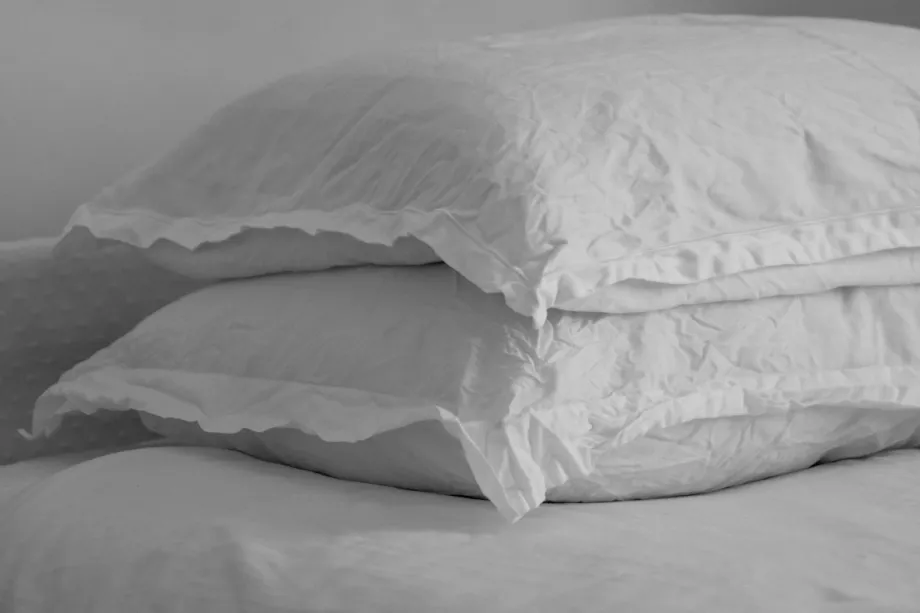
A pillow has one main job: to hold the head so the neck carries on the natural line of the spine. When the head is pushed up or allowed to drop, the muscles of the neck and shoulders work all night instead of resting. Finding the right pillow means thinking about how you lie, what the filling does under pressure and how the pillow is made and cared for.
Height and firmness by sleep position
Most people move between positions, but one usually dominates. Choose for that one first.
Side sleepers
Lying on your side leaves the widest gap, between the side of the head and the outer edge of the shoulder. A higher, firmer pillow fills it so the head does not tip down towards the mattress. Too low, and the neck bends sideways; too high, and it bends the other way. People with broad shoulders usually need more height than slight builds. Firm latex, dense foam, buckwheat or a well filled feather and down pillow all give the support this position needs.
Back sleepers
On your back, the pillow needs to support the hollow behind the neck while letting the head rest without being pushed forward. A medium height usually works. A very thick pillow tips the chin towards the chest; a very thin one lets the head fall back. Wool, down blends and contoured foam can all give the soft surface and steady support this calls for.
Front sleepers
Sleeping on the front turns the head to one side, which already puts the neck under some strain. A thin, soft pillow, or none at all, keeps the head from being lifted further. Soft down, silk or a flat microfibre pillow suit this position. Some front sleepers also put a thin pillow under the hips to keep the lower back from arching.
Natural fillings
Natural fillings tend to breathe well and handle moisture from the skin, which helps the pillow feel comfortable through the night.
Down and feather
Down is light and soft and moulds easily around the head. Feather, with its quill, is heavier and springier. The ratio between them shapes the pillow: more down gives a soft, sinking feel, more feather a firmer one. These pillows need plumping each day to restore their air, and regular airing stops body moisture making the filling clump.
Wool and silk
A wool-filled pillow feels denser than down and holds its height well. It manages moisture steadily, so it stays comfortable across a range of room temperatures. Wool can compact over time, and many wool pillows benefit from a firm shake and an airing outdoors now and then. Silk-filled pillows are low and smooth with a gentle give, and suit front sleepers or anyone who finds deep pillows too warm.
Buckwheat hulls
Buckwheat pillows are filled with the small husks of buckwheat seeds. The hulls shift to follow the shape of the head and neck, then settle into a firm base that does not sink overnight. Air passes freely between them, so they stay cool. They are heavier than other pillows and rustle softly when you move. Most have a zip so you can add or remove hulls until the height is right.
Synthetic, foam and latex
Man-made fillings offer consistent support and often simpler washing.
Polyester fibre
Hollowfibre gives a bouncy, airy pillow; microfibre is finer and imitates the softness of down. Both are light, and many can be machine washed at home. They tend to flatten sooner than natural fillings, so expect to replace them more often.
Memory foam
Memory foam softens with warmth and pressure, moulding closely around the head and neck and spreading the load evenly. A solid block gives steady, shaped support that never needs plumping. Shredded foam gives a similar feel with the option to adjust the amount. Foam can hold heat, which is why many pillows now include ventilation holes or cooling layers.
Latex
Latex is made from the sap of rubber trees, sometimes blended with synthetic latex, and formed into an open, elastic foam. It springs back as soon as pressure lifts, so it feels buoyant rather than sinking. Its open structure lets air through, and it keeps its shape for a long time. People with a latex allergy should avoid it.
Covers and ticking
The fabric that holds the filling, called ticking, affects both feel and durability. Cotton is the usual choice for its breathability. Down and feather pillows need a tight, downproof weave so fine clusters and quills cannot work their way out. A removable outer cover with a zip lets you wash the outside more often than the pillow itself and protects the filling from everyday wear. A pillow protector under the pillowcase does the same job for pillows without a removable cover.
Care and when to replace
Pillows take in moisture, skin oils and dust every night. Simple routines keep them fresh for longer.
Everyday care
Pull back the bedding in the morning so the pillow can air. Shake and plump down, feather and fibre pillows to bring back their loft. Wash pillows only as the care label allows; many fibre and some down pillows can be washed at home, while foam and latex usually cannot be soaked and should be spot cleaned instead. Anything washed must be completely dry before it goes back on the bed, because a damp core clumps and starts to smell.
Signs it is time for a new pillow
For fibre and down pillows, try the fold test: fold the pillow in half and squeeze out the air. If it stays folded rather than springing open, the filling has lost its resilience. Lumps that will not shake out, lasting stains, a smell that airing will not shift, or waking with a stiff neck are all good reasons to start looking again, using the same questions about how you sleep.
Frequently asked questions
How often should a pillow be replaced?
It depends on the filling and how it is cared for. Synthetic pillows usually flatten sooner than good down, latex or buckwheat. A pillow that stays folded when bent in half, has lumps or no longer holds your head level is ready to go.
What pillow height suits side sleepers?
Side sleepers generally need a higher, firmer pillow that fills the space between ear and shoulder, so the head stays in line with the spine. Broad shoulders usually call for more height.
Which pillow filling suits hot sleepers?
Fillings that let air and moisture move through them, such as wool, buckwheat hulls and latex, tend to feel cooler than solid memory foam. A breathable cotton cover helps too.